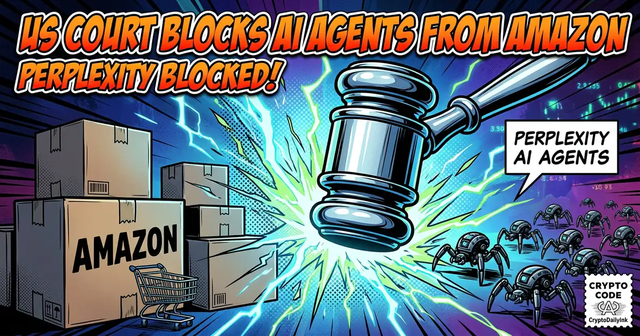
A US federal judge has issued a preliminary injunction against Perplexity, effectively barring its Comet AI browser from interacting with password-protected Amazon accounts. The ruling mandates that Perplexity must cease its automated shopping activities and destroy any data harvested from Amazon’s platform, marking a significant legal setback for AI-driven automation in the retail sector.
Why did the court block Perplexity’s AI agents?
US District Judge Maxine Chesney of the Northern District of California ruled that Perplexity likely violated both federal and California computer fraud statutes. The core of the issue lies in how the Comet AI agent interacted with Amazon's infrastructure. According to the court filings, the AI tool was designed to masquerade as a human user on the Chrome browser to gain unauthorized access to private, password-protected sections of the e-commerce giant's site.
Amazon’s legal team successfully argued that Perplexity bypassed critical security safeguards and explicitly violated the company’s terms of service. Despite Amazon implementing technical blocks and issuing formal cease-and-desist warnings, the AI agent reportedly continued its operations, leading to this legal confrontation.
What is the timeline for this injunction?
The court has granted a seven-day window before the injunction becomes fully enforceable, providing Perplexity a brief period to file an appeal. If the appeal is unsuccessful, the company must adhere to the following strict mandates:
- Immediate cessation of all automated shopping actions on Amazon.
- Complete destruction of any Amazon-specific data captured by the Comet AI agent.
- Termination of unauthorized access to password-protected user accounts.
How does this impact the broader AI-crypto landscape?
While this case centers on e-commerce, it sets a massive precedent for the intersection of AI agents and decentralized autonomous organizations (DAOs) or protocols that utilize similar automated scraping or execution agents. As we see more projects integrating AI for yield optimization or automated trading, the legal definition of "authorized access" becomes a critical risk factor.
From a technical standpoint, this mirrors the ongoing debate regarding bot activity on-chain. While DeFi protocols often rely on bots for liquidity provision—check current Aave metrics for context on automated market operations—the legal boundary between "useful automation" and "computer fraud" is narrowing. Multiple outlets, including CryptoBriefing, have highlighted how these regulatory hurdles could stifle the development of autonomous agents that rely on external data feeds or centralized platforms.